











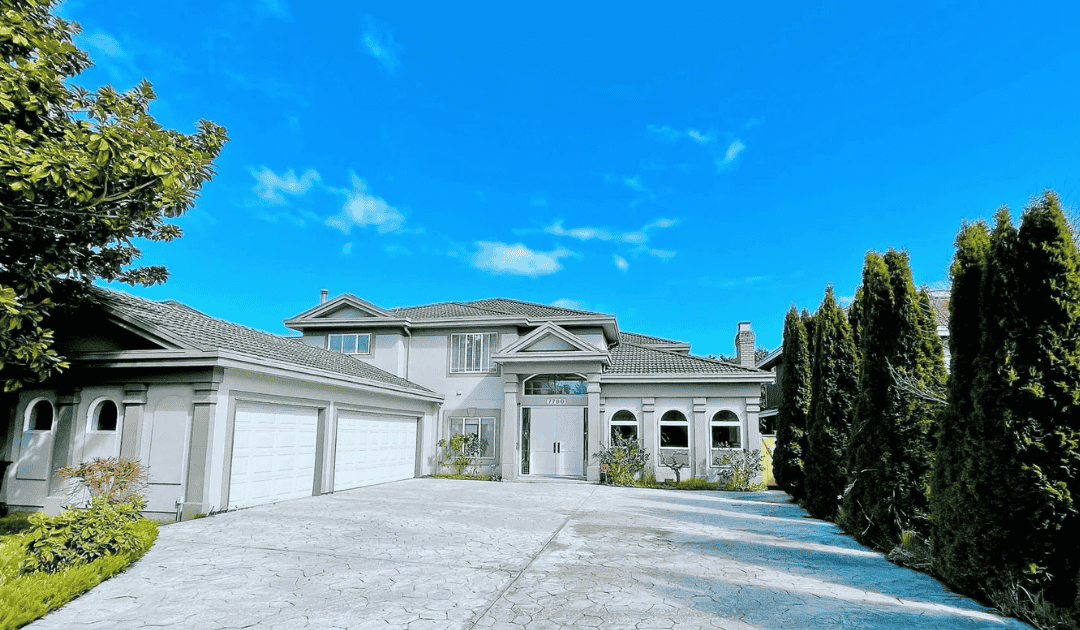
7780 Eperson Rd., Richmond B.C. (zolo.ca)
A B.C. Supreme Court judge has ruled in favour of a Richmond homebuyer who refused to complete a $2.65-million purchase after the property flooded just days before possession, finding the seller breached the contract.
Katherine Cheung agreed in April 2022 to buy a home at 7780 Eperson Rd., submitting a subject-free offer above asking. The possession date was set for Jun. 15, 2022.
Nine days before closing, a failure in the home’s in-floor radiant heating system caused significant flooding. When Cheung’s father and her agent attended the property on June 8 with inspectors, they found what the court described as an active and serious flood event.
“There was extremely hot water, saturated with mud and sand, bubbling up like a hot spring through the kitchen floor near the island,” Steven Cheung testified. Floors were warped and buckled, tile was cracked and displaced and water was seeping from the foundation into a saturated backyard.
Inspectors warned home was not livable
Inspectors retained by the buyer raised major concerns. One warned the home was not livable in its current condition and flagged the risk of mould developing within weeks. Repair estimates included roughly $155,000 for replacing the in-floor heating system, with a timeline of several months. Another recommended immediate review by structural and geotechnical engineers, citing potential risks beneath the slab.
The seller, Hui Xue Lin — who died before the case concluded and was represented in court by her daughter Tiffany Chen, who had also served as her listing agent — arranged for the leak to be fixed and initial drying work to be done. But as of the possession date, the court found the damage itself had not been repaired. Warped flooring remained, drywall had been removed to access plumbing and the home was effectively still an active work site.
Repairs to flooring and drywall were only completed between Jun. 20 and Jun. 28, after the scheduled closing. Even then, the court found some water damage including to baseboards and cabinetry remained into late July and early August.
In the days leading up to closing, the buyer received little detail about the scope of the damage or the repair work underway. The only direct update was a Jun. 13 text from Chen stating that “all pipes got fixed and we are doing flooring and dry walls in these couple days.” A plumbing report commissioned by the seller that same day was not shared with the buyer at the time.
The seller’s lawyer characterized the damage as “minor cosmetic” and insisted the transaction proceed.
Cheung refused to close and asked for the return of her deposit. The seller counterclaimed, arguing the buyer had breached the contract and seeking to force completion of the sale.
Court finds seller breached clause 8
In a decision released Apr. 2, 2026 Justice J. Hughes found the seller had breached clause 8 of the standard B.C. contract of purchase and sale, which requires the property to be in “substantially the same condition” on possession as when it was viewed.
The court concluded that standard was not met. Justice Hughes found the breach was fundamental. The seller was unable to deliver what the contract promised: a residential property ready for use.
“The defendant could not perform her primary obligation under the contract: to convey to the plaintiff a residential property that was ready for use as such,” the judge wrote.
The ruling emphasized not just the visible damage, but the uncertainty surrounding the extent of the problem. The property had recently experienced a significant flood, key risks, including possible structural issues and mould, had not been fully investigated, and the buyer was given little information about what had been done to address them.
Taken together, the court found this deprived the buyer of “substantially the whole benefit” of the agreement.
Hughes also found that clause 8 is a material term in residential transactions, meaning a buyer can walk away if a property is not in substantially the same condition at possession, even without proving a fundamental breach. In this case, the judge found both applied.
The court was also critical of Chen’s handling of the situation, describing her approach to investigating the flood’s consequences as “somewhat lackadaisical” and rejecting parts of her evidence about the extent of the damage.
The seller’s counterclaim was dismissed.
The property was relisted in October 2022 and eventually sold in January 2023 for $2,165,000 — $485,000 less than Cheung’s agreed purchase price.
Cheung was awarded the return of her $132,500 deposit, along with interest and costs.



Jordana is the editor of Real Estate Magazine. You can reach her by email.



