






Chris Fenton
By Carrie Brodi
Much like selling real estate, deep sea diving is an activity in which nothing ever goes as planned. Years of training could not have prepared British Columbia-based Realtor Chris Fenton for what he encountered the first time he ventured more than 200 feet below the surface of the ocean.
The year was 2009 and Fenton, his wife Kim and their exploration team set out to find a shipwreck that happened to be situated in the path of a shipping lane. The force of the currents against their gear-heavy bodies was so strong that their breathing became laboured, causing a buildup of carbon dioxide in their breathing tubes. Knowing that too much of this gas could be fatal at such depths, Fenton immediately signaled the end of the dive and he and Kim began their 45 minute ascent. They weren’t out of danger yet, though. They still had to find the boat that dropped them off. Because of the currents, they ended up far from where they started. It was a scary moment and a lesson in being prepared for anything, Fenton says.
“I had no idea the currents could do that,” he says. When asked about his calm demeanor in a situation that could have ended fatally, he replies, “Unlike other extreme sports, adrenaline is something you don’t want when deep sea diving. You have to remain as calm and relaxed as possible.”
Three years and many dives later, Fenton is more enthusiastic than ever to continue exploring Canada’s maritime history. As one of only a handful of certified deep-sea divers in his province, he is able to dive deep enough to discover wrecks that date as far back as the Gold Rush era.
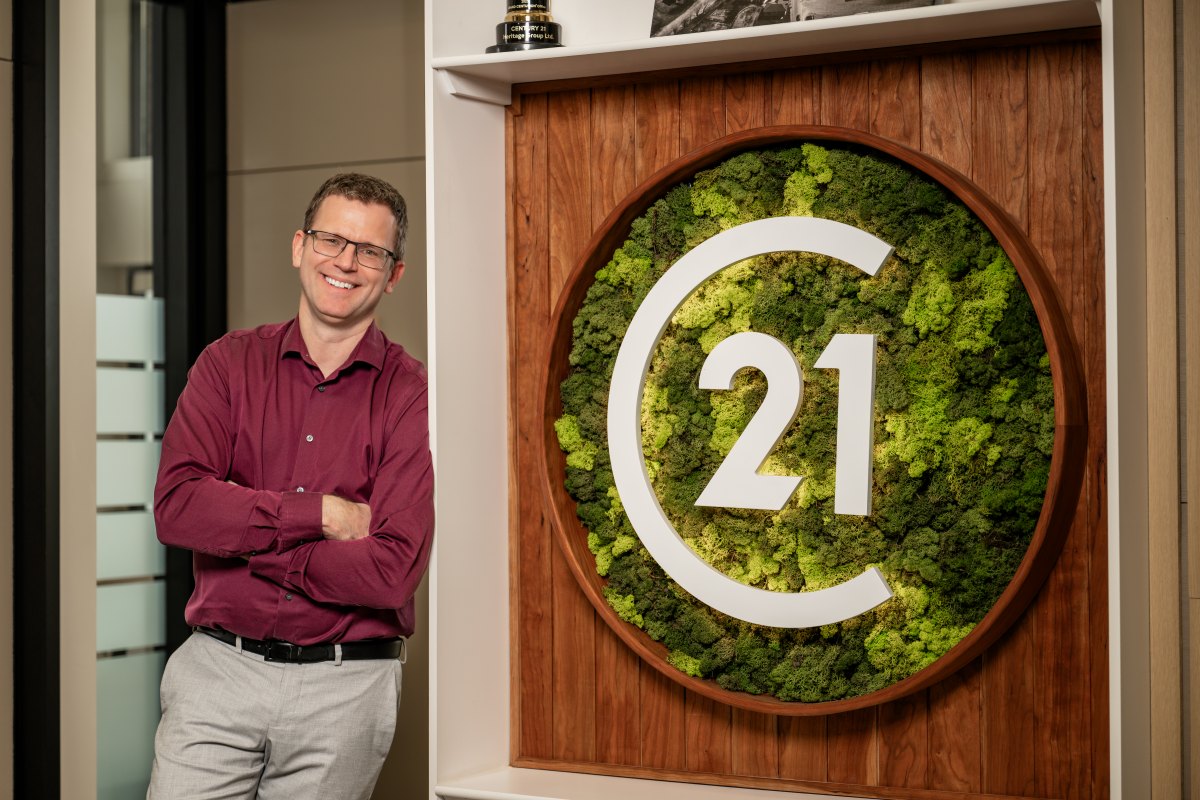
When he isn’t in a wetsuit, Fenton is a top-selling Realtor for Coast Realty Group in the Alberni Valley of British Columbia. He and his business partner (who is also his mom), Esther Fenton, run a small brokerage called The Fenton Team. They sell both residential and commercial property within their community of 30,000 people. Fenton loves his work as a Realtor, but he lives for his underwater adventure.
Fenton first got hooked on diving in 2003 while on a three-month vacation in Costa Rica. It was there that he did his first recreational dive. Since then he has earned three levels of certification: Recreational Instructor, Cave Diver and the highest level for deep water dives, Technical 2, which took him five years to complete.
In 2009 he formed the Shipwreck Exploration Team to explore ships that are too deep, or too challenging for the Underwater Archaeological Society of British Columbia to reach. In total, his team has discovered five new shipwrecks, many of which tell the story of Canada’s earliest explorers.
“The west coast of Vancouver Island is considered the graveyard of the Pacific with a shipwreck for every mile of shoreline,” he says. “Jagged bays and inaccurate maps are largely the reason why so many explorers lost their way and encountered so much danger.”
 A history and anthropology buff, Fenton is intrigued by the stories these nautical relics tell. “The way these people walked barefoot over mountains to get help says a lot about the strength of the human spirit.”
There are two types of wrecks: wooden ships and iron or metal ships. The wooden ships are the oldest and are mostly eaten away, whereas the metal and iron ships can sometimes be found fully intact.
To find the wrecks, Fenton’s team is given sonar images from the Canadian military of a given shipwreck that might be of historical significance. The team then plans their dive, hoping to find that particular ship, but it doesn’t always happen. On one dive they thought they would be exploring an 1800s-era wooden passenger ship called The Famous, which had passed through Borneo, but they ended up finding another ship.
If he had to draw a parallel between diving and real estate, Fenton says patience is a big one. So is teamwork.
“You don’t dive by yourself; it takes a team to function well. The exact same team approach applies to selling real estate,” he says.
As for his next dive, it will be a search for a Liberty Ship, which was lost 15 km off of the shore of Vancouver Island. The 450-foot freighter is expected to be lying in deep water. The team will need three to four different kinds of breathing gases, underwater scooters and high-powered lights. It’s a tricky dive that will be “no small feat” he says, considering the remote location of the site. And if he doesn’t find it?
“I’d be disappointed for sure, but if everyone comes home alive and walking, it’s a success. Short of that there are no failures in this sport,” he says.