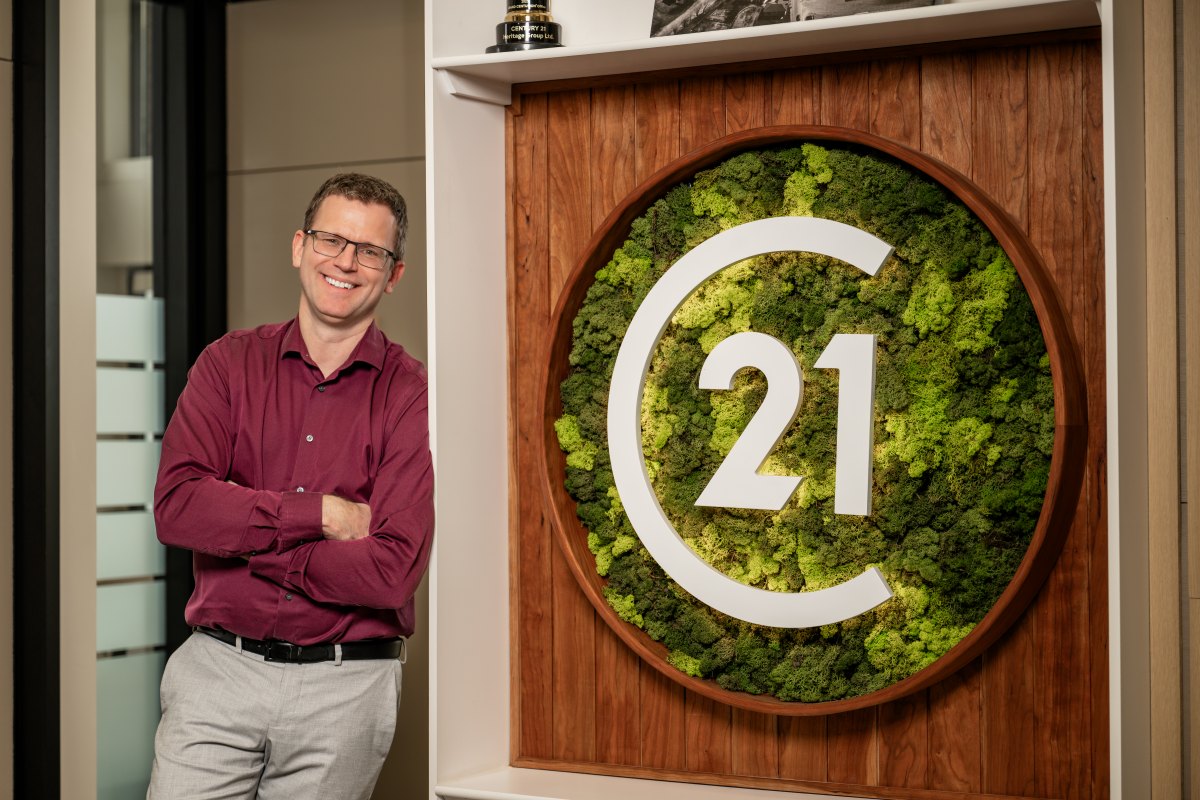







Peter Dupuis, left and Sid Landolt in the Philippines.
By Jean Sorensen
Two B.C. real estate professionals are spearheading World Housing, a social housing gifting project that allows condo buyers to contribute towards providing a home for some of the world’s poorest people.
“We are the world’s first real estate one-for-one gifting model,” said Peter Dupuis, CEO of S&P Destination Properties as he announced the project in Vancouver in mid-February.
The gifting model is based on TOMS Shoes (www.toms.com), which gifts a pair of shoes to a child for every pair purchased by a customer from the shoe outlet. Dupuis and S&P president Sid Landolt met TOMS founder Blake Mycoskie on a flight between Vancouver and Los Angeles, and learned about the concept of social entrepreneurship and gifting. “It really resonated with me,” says Dupuis, who liked the concept of using a business model to effect social change. He says it is taking action that improves the lives of others.
Dupuis then thought about who would be the world’s most needy. “If you could give to anyone on earth, who would you give to? The answer was “people who live in slums, people who live around garbage dumps.”
There are an estimated 1.2 billion individuals in the world who exist by harvesting material from garbage dumps, mainly in the Third World nations, he says. They live in makeshift homes devoid of security, electricity and water, and cobbled together from salvaged landfill goods.
Dupuis, who was writing his master’s thesis, so liked the idea of real estate one-to-one gifting to effect social change that he changed his thesis topic. Over the three-year period that he worked on it, the thesis research provided information for a workable model. He visited communities established around landfills in Mexico, Cambodia and the Philippines.
Dupuis and Landolt, who have sold more than 22,000 condos and specialize in luxury and resort projects, work with developers that become certified to use the World Housing brand on a sales project. The developer pays a $25,000 certification fee, which goes toward marketing the project through Dupuis and Landolt. When a condo unit sells, the developer pays $3,000 to Community Contribution Company (CCC Inc.), a Canadian corporation founded by Dupuis and Landolt and six other founding members. A total of $2,500 flows from CCC Inc. to a builder in a foreign country, which supplies the home to a needy family living in or around a garbage dump. The remaining $500 is used to fund CCC Inc.’s operations. The organization’s goal is to have 30,000 people in 5,000 homes by 2020.

A World Housing project in Cambodia
Dupuis says that all profits generated by CCC Inc. will go back into expanding its housing initiatives.
The other six World Housing founding members are Harry Wong, CEO of Creator Real Estate Group in Taipei, Taiwan; Hunter Milborne, CEO of Milborne Real Estate in Toronto; Jeffrey Stone, president and CEO of Resort Group, Honolulu, Hawaii; Laura Rowser, former international production manager for Lululemon in Vancouver; Robert Foord in Vancouver, president of Kal Tire; and Tony Allard, president of Hearthstone Investments in Vancouver.
The 130-sq.-foot house provided is elevated on stilts to prevent against flood and vermin and is constructed of metal, with insulation against heat and cold. Locals from the landfill area are trained in the construction of the homes. Homes are equipped with a solar roof panels but also are wired for electricity, if it is available in the area. A cistern for water collection is provided. There is also open living space below the raised units. For every five homes built in an area, a wash-house and toilet facilities are provided.
Landolt said the homes are a first step in making families self-reliant beyond foraging in the garbage dump areas. “It is very hard for a family to become self-reliant unless they have a house,” he says. The family’s basic needs such as water and shelter are taken care of and there is a locked place for possessions. The homes are built in the areas that the families have known as their communities rather than transporting them to another areas.
World Housing hopes to produce 40 homes a month with recipients selected on the basis of having a stable domestic life, free of domestic or substance abuse, and who want to send their children to school for an education.
Dupuis and Landolt used a Hawaii development as a pilot project to raise funds for 53 houses for families living in a dump in Steung Meanchey in Phnom Penh, Cambodia. Others projects are now being considered in places such as the Philippines (Manila’s Smokey Mountain landfill) and a landfill outside Puerto Vallarta. Projects in India and Africa are on the radar.
Dupuis and Landolt said they expect to have a local housing project launched with World Housing branding in Vancouver by early summer. Another project in Toronto is in the works.
For information: www.worldhousing.ca.