





Here’s part of a recent conversation I had with Dr. Zvi Blank, a U.S.- based independent consultant and trainer with extensive experience in environmental issues pertaining to various types of real estate markets.
Q. What specific environmental issue(s) do you believe residential real estate agents need to know to become successful?
A. The old cliché, “Location, location, location” applies to the quality of the neighbourhood in which the property is located, not only in terms of educational facilities, shopping convenience, and so on, but also in terms of proximity to potential sources of pollution (both air and water). You may remember the explosion of liquid propane storage tanks in Toronto a few months ago. Would you like your house to be near that tank farm? Similarly, you want to be sure that the water supply in your area is safe to drink.
Every agent needs to know about asbestos in buildings and the importance of how to deal with it. They also need to know about lead in paint, underground storage tanks of heating oil, private wells (if they exist on the property), and septic tanks, as applicable. Vendors may want to know if the insulation in the house is likely to emit residual formaldehyde (a highly carcinogenic material) that was used in manufacturing insulation in the past.
Now, what I mean by “need to know” is not necessarily knowing all the answers to all the technical details, but knowing about the potential problems and how to get the answers to customers’ questions. They can always turn to an outside consultant for help.
Q. Can you outline environmental issues of concern for agents who specialize in commercial properties?
A. All the issues outlined above may well be relevant to commercial properties. Whether the potential buyer can pay cash for the deal or finance the purchase through a third party, the sophisticated buyer will most likely want to conduct a Due Diligence Study (otherwise known as Phase I investigation, All Appropriate Inquiry or ASTM E 1527) and depending on the result of Phase I, a Phase II may be desired. (Phase II may involve sampling in areas of concern on the property that have been identified in Phase I, such as near the location of a heating oil tank).
The services of a competent environmental consultant may be required.
A good real estate agent should be able to identify, for example, the presence of mercury-containing light fixtures and possibly even PCB containing-transformers. If the agent is not sure, again, the advice of a consultant should be sought.
I can share with you a few examples of how our firm has helped clients with some environmental issues. In one case, a lawyer owned a commercial condominium where most tenants on site were offices. One unit became available and a new potential tenant (coming through a real estate agent) was going to set up a shop providing a polyurethane-based product that required the use of at least one hazardous chemical on site. To do that, a variance was required, which the tenant applied for from the local planning board. The condominium owner realized he needed an expert opinion on the risks involved as a result of storing this chemical in the building. After an investigation of the process and the unit in which the business was going to be set up, we provided the owner with a risk assessment that convinced the planning board to vote against approving the deal.
In another case, a buyer was looking for a property to set up a day care centre in New Jersey. After an extensive search, he identified an attractive deal in a shopping mall, conveniently located with good financing terms, and he was ready to sign on the deal. Now, in the state of New Jersey, day care centres must be licensed and therefore a due diligence study is mandatory. Our consulting firm was hired to perform the study. In addition to looking at the site itself, we looked at adjacent units and we noticed that the day care centre was going to be very close to a dry cleaning operation that used perchloroethylene – a carcinogenic solvent that is very volatile – as the dry cleaning solvent. From our experience there was a high likelihood of vapour intrusion into the day care centre unit due to the construction of the plenum on the premises.
We advised the buyer of the risk he was taking and the potential liability he may be facing, not to mention the impact on the insurance he would have to purchase.
Q. Can you tell us about some other issues that may be unique to industrial properties?
A. Generally speaking, these are the most complex type of properties any real estate agent is likely to face. So, I must add that in addition to the issues and examples already discussed, a thorough understanding of the industrial activities that have taken place in the past (such as in the case of Brownfield properties) on the site or are currently taking place, is required. In this case it is always recommended to hire the services of an environmental consulting firm who can also advise on site remediation, should it be necessary.
Q. One final question: what can you tell us about green buildings and to what extent does the real estate agent need to know about that?
A. Again, knowledge of green buildings or sustainable buildings is extremely beneficial. Nowadays everybody hears the buzzword “green buildings” just like you hear about “green chemistry”, “green energy” and all other greens.
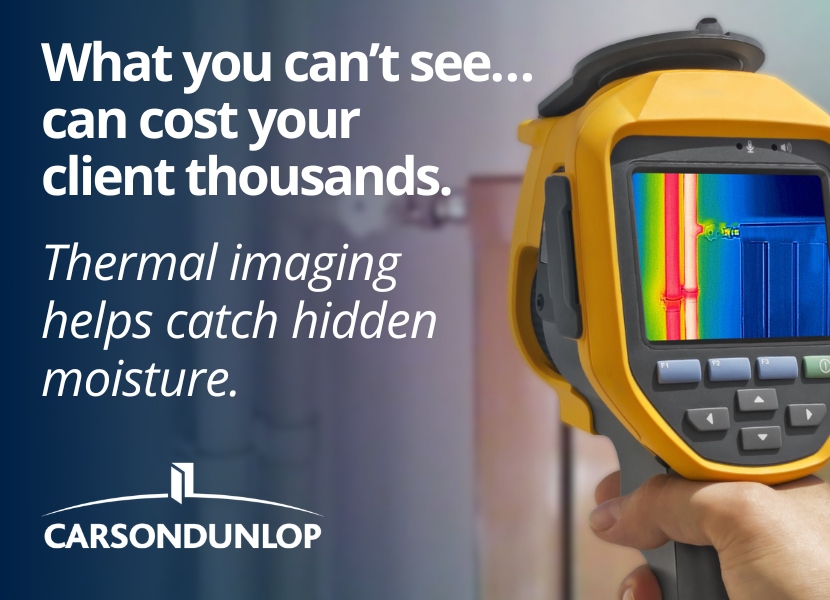
So what can be defined as green or sustainable buildings? These are buildings that save energy via a number of ways. They have to be well insulated, and could provide esthetic appeal at the same time. For example, if a major part of the exterior walls is glass, the glass should have a specially glazed surface so as to repel heat in the summer but allow heat to be retained inside during the winter. There are hand-held devices that can detect infrared radiation and thereby measure heat leakage (energy losses) from buildings. These instruments are useful in conducting an energy audit of a building. If a building is equipped with solar panels it can generate its own electricity and in some cases also heat.
The way the building is maintained, including cleaning, disposing of waste and protecting against pests is also an important part of considering whether a building is green or not.
Zvi Blank, Ph.D., CHMM, has a degree in chemical engineering and business management, and is a seasoned veteran of environmental issues and management of hazardous materials. He has been a consultant, trainer, and expert witness for over 35 years. www.calilabs.com; phone (973) 335-2254.
Avi Rosen is a 40-year veteran in our industry and has written many books, articles and conducted many seminars. He currently manages a Century 21 office in Toronto. He is also back at university, studying business administration and marketing and economics. Phone (416) 229-6400.