











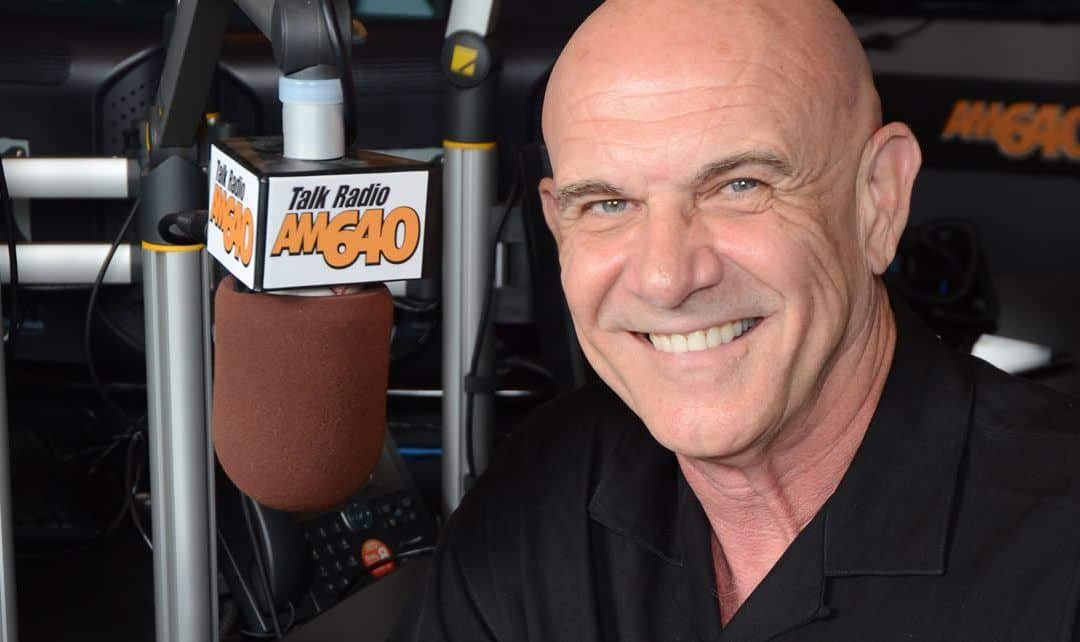
Lou Berkovits, who’s with Harvey Kalles Real Estate in Toronto, has a unique method of lead generation that his broker of record Michael Kalles deems “unconventional, creative and very successful.”
It’s definitely not for everyone, though.
Berkovits is the host of a one-hour radio show called Real Estate SOS that airs every Sunday at 11 am on Toronto’s talk radio AM640.
The show is now in its seventh year and Kalles and Berkovits agree that it gives Berkovits huge credibility and brand recognition, establishing him as a market expert, generating an impressive volume of leads and building his network of connections and referrals.
“Many people tuning into the show end up contacting Lou afterwards for advice and assistance,” says Kalles. “He discusses timely issues that affect buyers and sellers in Toronto’s hectic real estate marketplace. Lou also invites expert guests to the show, such as developers, mortgage professionals, home stagers and other relevant real estate specialists to share their tips and tricks with listeners.”
Listeners also can call in live to discuss real estate.
The show’s guests have included politicians. Rob Ford, Toronto’s (now former) mayor, was on when he was campaigning for office.
Ford’s rhetoric on that occasion was typical of any campaigning candidate, says Berkovits. “He was saying he’d get rid of the land transfer tax if elected. I pushed him hard….He stumbled on the question of how he’d do it, just said it was an unfair tax and never answered the question.”
Berkovits – who earlier in his life considered a career in radio but decided against it – has a real estate brokers’ license and is also a licensed mortgage broker. He also has a diploma in business management and an extensive background in construction, project management, development and architecture. It’s “a full range of experience,” he says.
His alliance with radio began when he was approached by a Corus Entertainment program director to be a regular guest expert on a show that included real estate among its topics.
“I talked about the state of the real estate market in a positive way. It was challenging to do,” because the year was 2008. The market had crashed and burned and Berkovits was in a similar state.
“I was going through a change of life, a new relationship,” he says. “I’d made the decision to sell my house – in the worst time to do so, a recession. I talked about that but with a positive twist….how I got the house ready, how I marketed it. People were calling me after. They liked the honest approach.”
At the time he was struggling, searching for a way to stand out in real estate. With radio he found his ticket.
“I’m a big believer in the power of radio,” he says. “I called the program director and asked if I could have my own show about real estate. We worked out a contract. I pay for it.”
He says his show is paid expert programming, along the lines of an infomercial, except that he makes every attempt to rise to the challenge of not being too obvious.
“I call it media farming,” he says. “I am ultimately doing it to generate business. But I don’t want to make it sound too much like an infomercial, or that I’m saying, ‘Call me! Call me!’ although I am. I want to be entertaining and informative as well and I think I’ve been able to strike that balance.”
Radio as a form of media farming is cost prohibitive and so is not for the majority of agents, Berkovits says. “Most can’t afford to do it.”
Radio very nearly did not become his mother ship either.

“I’m a big believer in the power of radio,” he says. “I called the program director and asked if I could have my own show about real estate. We worked out a contract. I pay for it.”
“I was advised early on to keep my expectations in check,” he says. “The way it normally starts, you can do a show for a month or two and no one will call. And that’s what happened. I went months with no feedback, to the point I was ready to give up.
“People listen to radio intermittently… Nobody listens to my whole show, except my mother.”
It made for a painful first year, Berkovits says. “But eventually I started building a relationship with an audience I could not see.” Now close to 100,000 people listen to his show every Sunday and it’s one of the highest-ranking expert opinion shows on the station, he says.
An aspect of his business that has grown immensely thanks to the show is his referral network, he adds.
With the show now being streamed on social media and podcast, he gets calls from all over from people who hear it and want him to provide referrals to agents where they live or vacation. The referral component involves sourcing agents for anything from “villas in Tuscany to luxury condos in Mexico,” Berkovits says.
“I’m building up my network of connections outside my market…and also of course this is reciprocal,” he says.
As for his clients, “I have been able to use the radio show as a platform to promote their homes for sale on the air,” he says. “This goes way beyond MLS and online exposure…I’m also able to promote new listings, open houses, special events and unique offerings. As an example, I occasionally offer ‘front of the line’ and discount pricing on new condominium launches to the first 12 people who contact me after the show.”
It doesn’t hurt his business either that his radio show gives him enough clout as an expert that he is sometimes asked to appear on local television networks to discuss market conditions.
“Generally there’s a lot of brand recognition and credibility due to being on the radio,” he says. “I think to be there, especially if buying your way in, you have to back it up with knowledge and experience. It challenges me to read up on market trends and upgrade my education so that I am on the forefront of what’s going on.”
As to what exactly is going on, Berkovits expects the Toronto real estate market to continue performing well (but with low-rise housing outperforming condos) and believes the country is experiencing a downturn, but not heading into a recession.
He predicts that multiple-offer scenarios will continue in Toronto and advises agents to deal with them by being completely transparent with clients and having a clear game plan, which includes the now mandatory summary documents.



Susan Doran is a Toronto-based writer who has been contributing to REM since its very first issue. Highly experienced, her work has been featured in a wide range of news, lifestyle, and scholarly media, including the National Post and Canadian Press.



