









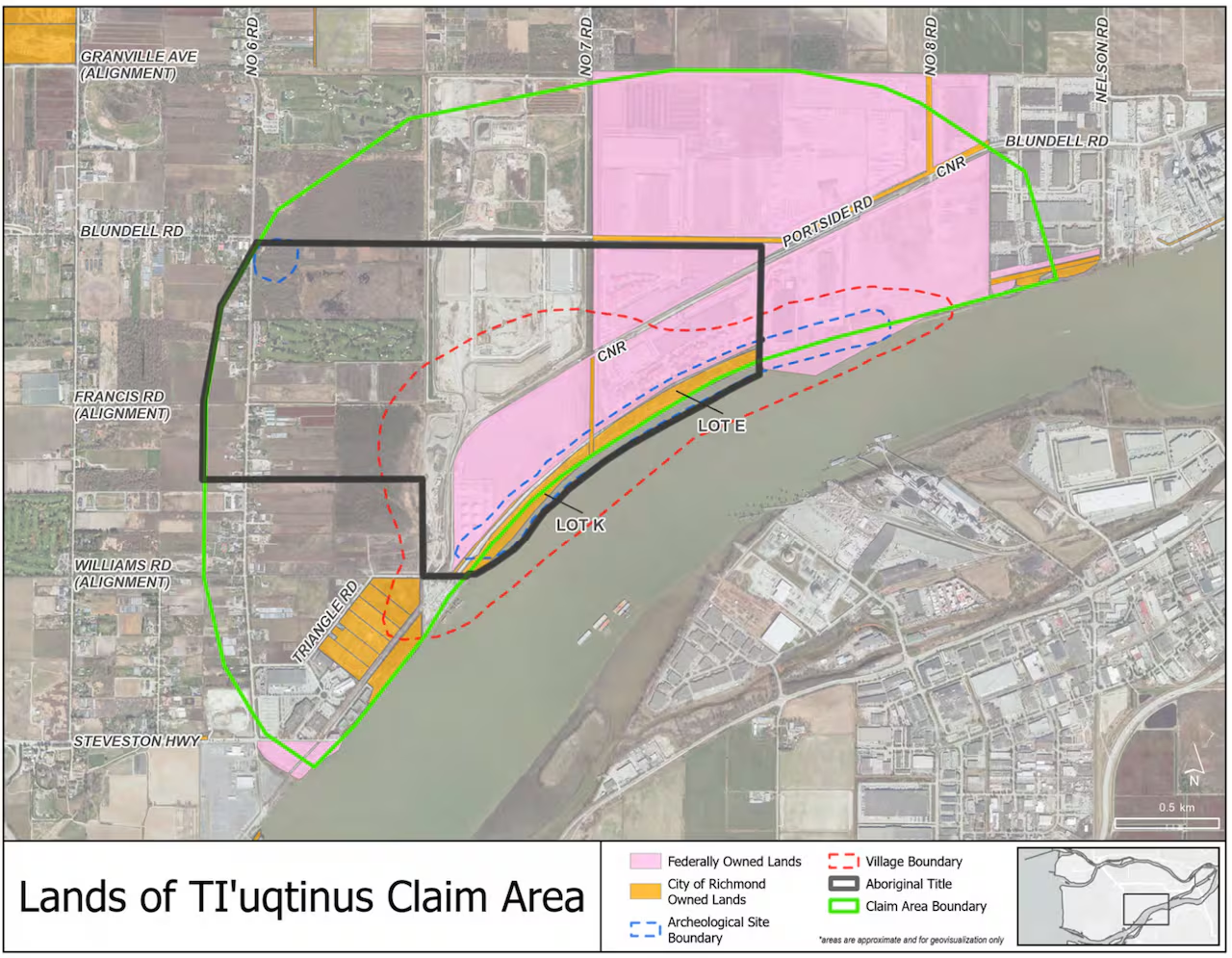
A map that shows part of the claim area from the City of Richmond (City of Richmond)
Almost four months after Justice Barbara Young confirmed the Cowichan Tribes hold Aboriginal title to 750 hectares in Richmond, B.C., the shock waves haven’t settled. Her ruling, even with an 18-month transition period, has left many property owners uneasy and questioning how, or if, their titles could be affected, despite no First Nation seeking private claims to date.
Shortly after the decision, about 150 property owners received a letter from the City of Richmond stating the ruling “may impact the title to your property,” while Aboriginal groups have been resolute that “Aboriginal title and fee simple private ownership can and do co-exist,” according to a statement from the British Columbia Assembly of First Nations.
The Cowichan decision has clearly disrupted the foundations of B.C.’s land title system. But another issue has been brewing: how are Realtors working in the area, navigating the uncertainty?
What experts are seeing
Realtor Chris Dinnell of Dinnell Real Estate said he has not seen notable market shifts since the ruling, nor has he heard of any mortgages being denied — except for one individual who spoke at a town hall meeting in October.
“The affected area is so limited in the grand scheme of the market here, so no, I don’t know anybody that’s been affected,” Dinnell said. “The regular market’s been status quo. It’s been slow all year, especially the condo market.”
At the time of writing, there were two apartments listed for sale within the claim area boundary ofthe lands claimed by the Cowichan Tribes, but not within the Aboriginal Title area. REM reached out to the Realtors with the listings to determine whether they faced any issues, though neither responded in time for publication.
The properties had been listed for 70 and 105 days, respectively, according to Realtor.ca. The average days on market for apartments in the region was 38 days last month, based on data from Greater Vancouver Realtors.
Mortgage broker Kelly Hudson of Kelly Hudson Mortgages said she has not heard of any financing issues related to the ruling. In an email, Hudson confirmed she has not “had any mortgages I’ve been working on affected by the Cowichan Tribes decision.”
Support and resources for Realtors
Though there appear to be no concrete issues with properties in the Richmond area so far, unrest among stakeholders is palpable given the complexity of the reconciliation process.
REM reached out to the BCREA for comment on the situation and to ask what support and resources Realtors can access as they navigate the issue. In an emailed statement, Koot pointed to materials the association has created for its members through BCREA Access. REM requested access to the materials but was not granted it, leaving some uncertainty about what guidance Realtors are currently receiving.
A complex history, not easily resolved
In an interview with CBC News, regarding another Aboriginal title claim to lands in Kamloops, B.C., BCREA’s CEO Trevor Koot said that he’s seen the province’s market sentiment show docility due to the uncertainty, but not full-fledged deal-breaking.
“ I think across the province, I would say that, we have heard…not necessarily deals falling through, but certainly people saying, ‘I’m just going to pause for a bit’,” he said, adding that, “I think there’s a really important distinction that has to happen between certainty or uncertainty and the trust in the overall system.”
Koot stressed that Aboriginal title claims across B.C. are deeply complex and not easily resolved.
“It’s got a complex history. It’s going to have a complex future, and we just need to make sure that we’re all showing up to the conversation with a balanced perspective on what brought us here and where we’re all going, and we’re all going there together.”



Brett Surbey is a corporate paralegal and freelance writer who has written for Yahoo Finance Canada, Success Magazine, Publishers Weekly, U.S. News & World Report, Forbes Advisor and multiple academic journals. He and his family live in northern Alberta, Canada.
Judicial appeals are not completed – don’t panic yet
The primary problem is the B.C. courts do not understand the constitution nor previous SCC rulings and have left property owners hanging. This is compounded by the lack of property ownership understanding by municipal govts and yes Realtors and Lawyers , compounded by sensationalistic news reporters,
Suffice to say if you own your property “fee simple on title”, the property is yours.
Property ownership in Canada comes through a system that only the crown can make property private ownership – so the crown made treaties , gained control over the land through treaties, then dispersed some of these lands to private property ( which transferred its acquired rights to the new private property owner.) and retained ownership over the balance
In Ontario and eastern Canada the crown transferred its ownership by using Crown Grants – removing its authority over the land and assigning it to the assignee( new property owner)
As such when the Chippewa tribe claimed lands in Niagara -on claim the lands were never placed into treaty with the crown – the ruling was the honour of the crown was to make the tribes damages whole but the lands dispersed by the Crown, which was by Crown grants registered on title as land patents, remained in full effect and the fee simple land owners retained their ownership rights.
As real estate agents we are taught rules and regulations that constrain our abilities to act as agents, but we are not taught real property law, the foundations of which is property ownership. There is no educating as to how private property came about and the true rights that run with the land.
Western real estate has a fundamental difference respective to eastern real estate – east Canada real estate has a large component of pre confederation grant lands which under section 109 of the constitution, Provincial authority (esp Ontario) over these grant lands are very restrained. These land grants transferred full ownership authority over the identified grant land from the crown to the grantee with the only authority remaining over the land to benefit of the crown defined in the reservations specified in the grant .
The west is almost all post confederation grants in which the grants are written differently and these grants actually spell out what the owner can do on the land and Crown ( albeit the province and fed) retains all other rights which it might deem it wants to exercise ( eg mineral rights a foot under the soil)
So I suggest the realty board for this contentious area might undergo the title search process back to original grant titles, confirm the lands were transferred to private property by the crown ( by crown Grant or otherwise) and with this knowledge all property owners can effectively hold the crown liable for any and all damages including legal fees and register this demand for compensation upon the Crown ( which would be B.C. and Fed Govt)
By the way the Algonquin nation has recently just completed its settlement process under same issue – The Crown claimed ownership over vast areas in northern and western Ontario when there was no treaty agreements. No one lost their ownership rights but the Govt has had to make the Algonquin nation whole through a formal treaty and large amount of cash. There was no land given back to the Algonquins, as the treaty effectively states they retained their ownership of certain lands within the treaty area and the treaty was only respective to lands being transferred to the Crown (Canada) . Within these lands which now come under control of Canada, -the treaty benefits also compensated them for lands deemed as private owned at time treaty was signed. Effectively private property owners continue to own their property under the rights granted by Crown grants or agreements they made with the crown subsequently .
We easterners “heard” that westerners “thought” they didn’t have to bother to make Treaties with Autochthonous peoples … and now the treaty-less are paying the price.