








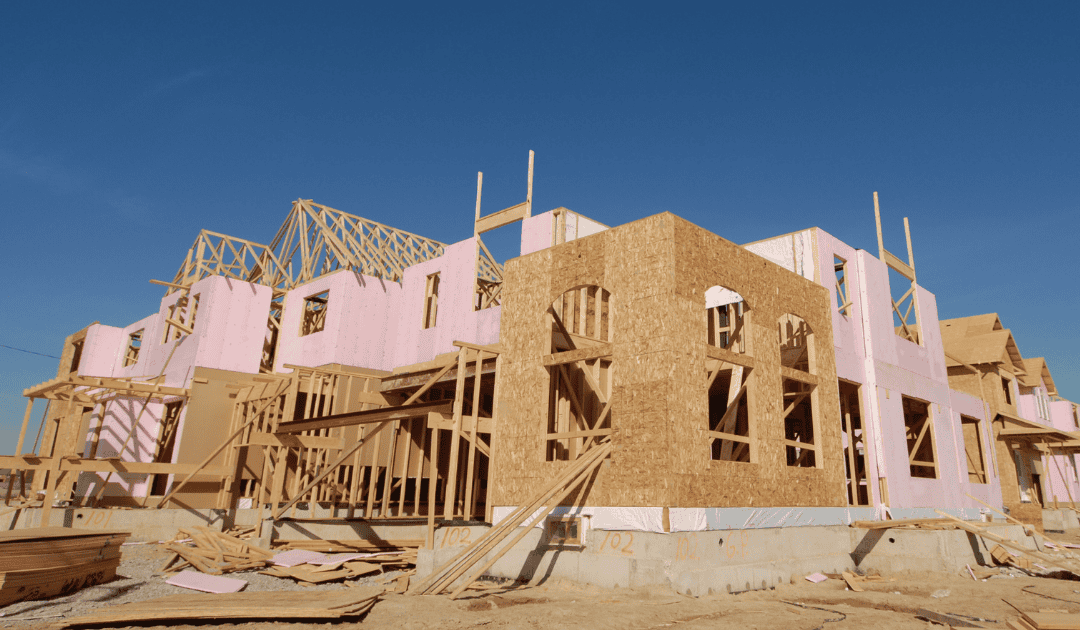
For years, municipal development charges have been quietly pricing Canadians out of home ownership. Now, Prime Minister Mark Carney and Ontario Premier Doug Ford have promised to significantly cut those charges for three years to boost housing construction — a welcome move for the residential construction industry and for anyone hoping to buy a home.
The governments agreed to spend a total of $8 billion over the next 10 years to help cover infrastructure costs for municipalities that lower development charges (DCs). It is now up to municipalities to do their part and support those reductions so that all three levels of government are on the same page.
Everybody needs to be singing from the same song sheet on this one. Unfortunately, there are rumblings that not all Ontario mayors are eager to participate.
Aurora Mayor Tom Mrakas told The Hill Times recently that his reading of the decision is that it is not mandatory and it is up to municipalities to decide if they will comply with the measure.
Under the federal-provincial plan, the federal and provincial governments will cover a part of the shortfall in municipal revenue resulting from the DC cut. The concern is that local councils will have to shell out a portion and, in order to have the funds, they’d have to hike property taxes to fill the gap.
Don’t look a gift horse in the mouth
The concern is understandable, but municipalities would be wise not to look a gift horse in the mouth. It will require all three levels of government working together to solve the housing crisis.
The present situation is unsustainable. For the past couple of decades, DCs have been on a trajectory that is unjustifiable and economically counterproductive. In many municipalities, they’ve grown exponentially with few barriers, as new buyers don’t have the same clout as existing ratepayers.
DCs levied by municipalities can hike the cost of building a home by up to $200,000. They are particularly onerous for those entering the market for the first time.
A report prepared earlier for RESCON revealed that the tax burden now accounts for 36 per cent of the purchase price of a new home. That means on a $1-million new home, $360,000 is taxes, fees and levies. DCs are a big part of that amount.
A 5,000% increase in 25 years
We have advocated for Ontario and the federal government to work on lowering the charges, as they’d evolved from a relatively modest cost into one of the largest components in the price of a new home.
In a 25-year span, DCs on a single-detached home in Toronto have risen by more than 5,000 per cent — far outpacing inflation, which increased by just over 70 per cent during the same period.
They are a regressive tax and have been on a trajectory that is unsustainable and economically counterproductive.
It’s nuts.
If the same increases were applied to a loaf of bread, for example, a loaf costing $1.31 in 2000 would cost $65.50 today.
The economic case for cutting DCs
DCs, along with other government-imposed costs, dramatically inflate the cost of housing. They affect housing affordability and often determine whether or not a project is financially feasible. When the costs are too high, buyers don’t buy new homes and therefore builders don’t build.
The implications are profound. Middle-income families get priced out of home ownership. With fewer homes being built, the industry employs fewer workers — and the economy suffers.
A study done by Concordia University’s John Molson School of Business found there is a big economic case to be made for boosting homebuilding.
The report concluded that public investments in homebuilding, including streamlined approval processes and reduced input costs, can quickly translate into wider economic benefits by fuelling business activity and local revenue growth as households experience greater levels of disposable income.
For example, in an illustrative model for Toronto, a $3-billion housing-supply incentive program could generate an estimated $672 million in recurring annual tax inflows, implying a four-to-five-year fiscal payback — even without accounting for further positive multiplier effects.
There is no time for complacency as reports suggest Ontario could face a GDP reduction of 1.5 to 2.5 per cent between 2026 and 2027 directly linked to the collapse in residential construction.
A move in the right direction
The federal and provincial governments deserve kudos for tackling the issue. In the past, some municipalities, like Vaughan and Mississauga, have taken actions to address exorbitant DCs, but others have not.
While the new housing market has been affected by many situations that are out of the control of governments — namely tariffs, geopolitical events, and material and labour hikes — DCs are within our control. The planned changes are the equivalent of a down payment in some markets.
Combined with the recent measures to eliminate the 13-per-cent HST on new homes priced under $1 million, with a partial rebate for homes priced under $1.5 million, and other initiatives to tackle red tape, streamline approvals and reduce other barriers to homebuilding, the proposed steps to temporarily cut DCs are certainly a move in the right direction.
Regulations urgently needed
The industry, however, is still waiting for regulations that will determine how the recent tax cuts will work. They need to be released as soon as possible, as we are hearing that some new projects are getting stalled while waiting for the regs. So far, no dates have been provided as to when they will be released.
Our industry is at a critical time.
Latest projections from the province show that new home starts are expected to fall to 64,800 this year, from 65,400 in 2025. A slight improvement is anticipated in 2027. However, it is abundantly clear that taxing housing in the same way and expecting a different result will not work.
We are hopeful the latest move by the federal and provincial governments will move the needle.



Richard Lyall is president of the Residential Construction Council of Ontario (RESCON). He has represented the building industry in Ontario since 1991. Contact him at [email protected].