








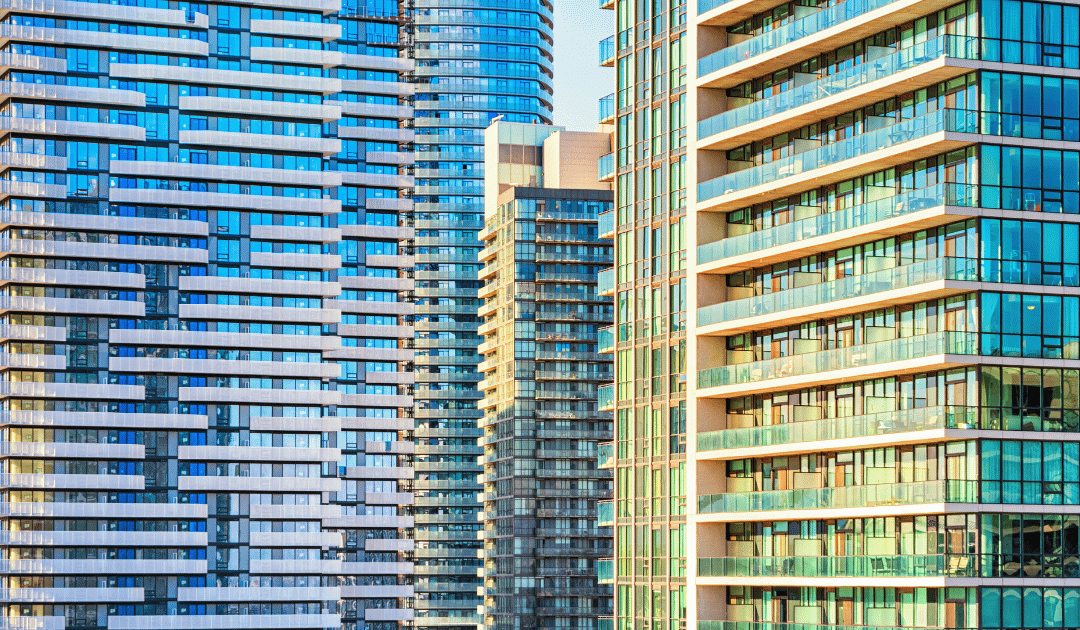
Condo bulk buying is gaining traction as Toronto’s struggling condo market has a glut of inventory that developers are looking to unload.
Harley Nakelsky, president of Baker Real Estate, told Real Estate Magazine that he is doing more bulk deals than likely anyone else in the world. He said single deals happen at a slow rate, and given the amount of inventory developers have, they’re interested in speeding up the process by selling groups of units. Potential bulk buyers include institutional investors, family offices and groups of individuals looking to buy inventory and convert it into rental product.
“(Bulk buyers) do it for ROI,” Nakelsky said. “This is the best time to buy that we have ever seen.”
He said some well-educated investors are getting on board with bulk buying and it is where they want to put their money. Each bulk buyer has a different theory over what will work best for them, be it bigger or smaller units, within the city or outside of it. Typically, they hold onto the units long-term, Nakelsky said. The market is heading toward a cliff in 2029, when there won’t be enough inventory to meet demand, he said, so that could be when bulk buyers see a large return on their investment.
There are a few rounds of negotiation typically in a bulk deal, and Nakelsky said about half of bulk buyers give him offers that won’t be considered by developers because they’re too low. There are still aggressive promotions and pricing to make it worth buyers’ time and money, though.
“They’re getting discounts,” Nakelsky said. “(Just) not big discounts.”
He said it’s good that buyers are taking away inventory, as it will eat up what’s out there and get developers building again, easing the impact down the road if building comes to a halt. The market is also in need of more rental housing, Nakelsky said, but since the financing and cost structure of creating it is quite different from condos, many developers are hesitant to make that switch. Bulk buying is one way rental housing is added to the market, by converting condos.
Deals often shrouded in secrecy
Pauline Lierman, vice-president of market research for Ontario and Quebec at Zonda, told REM that bulk buyers typically buy 40 to 50 units near a building’s occupancy, after construction. She said there can be “quite the discounts,” with deals that can often be $100 to $200 per square foot below the standard price, bringing it to about $800 per square foot.
Some bulk purchases have been made public, but often they’re shrouded in secrecy, Lierman said.
“They’re doing deals that have NDAs. So they can’t really talk about them,” she said. “This is why it’s such a black box.”
$1.3-billion fund aims to convert condos to rentals
One deal that was made public is a $1.3-billion private-public fund for bulk buying condos led by investment firm High Art Capital, with $300 million put in by the Ontario government. This follows a similar bulk-buying push by Montreal-based Jesta Group, which pledged up to $500 million toward acquiring more than 1,000 Toronto condo units.
High Art Capital Managing Partner Ryan Roebuck told Real Estate Magazine the firm reached its goal of $1 billion from private investors and even exceeded it, so it will be placing a cap on the fund. He said High Art Capital has already started buying units and plans to purchase over 2,200 of them.
The success of the fund shows how appealing buying condos in bulk is right now, and Roebuck also attributes it to input from the provincial government, which he said “creates a unique structure.”
“The scale of the fund has enabled us to unlock a different set of purchases,” he said. “So we’re able to target much larger bulk buys than really anyone else trying to do this, just because of the size and scale of the fund.”
He said the fund’s structure has created an “advantageous scenario” for equity investors, although the large amount of equity required and the complexity of bulk buying has made it difficult to get investors on board.
Roebuck said the fund could buy in excess of 200 units in a building at a time, and could purchase between 30 to 100 per cent of a building. High Art Capital is tracking every project across the GTA and targeting those with the highest return potential, Roebuck said.
“These are really rental buildings largely subsidized by investors for the developers,” he said. “So why don’t we aggregate those and actually turn them into the purpose that they are meant to be, which is rental properties?”



Eric Stober has over 10 years experience as a journalist and writer at publications big and small, including Global News, Toronto Life, Post City Magazine, Greencamp.com, the Toronto Star and The Grid.



Last three paragraphs are the nub
What about Condo Rules and Regulations regarding the number of rental units? As well as voting rights. The investors would have a majority and really control the condo building. And, are these supposedly long term rentals or short term rentals, such as an AirBnB? They would basically become just another hotel. Suppressing sales data also skews sales data and true value. This type of buying should be illegal. Was it not investors that were part of the inventory problems of the past? They should just let the market dictate sales and values. As was stated, by 2029 inventory will be tight because there is no new building going on right now. Maybe now is the opportunity to begin building to avoid that predicted inventory shortage in 2029 and ease the housing crisis. Let a typical Buyer purchase at these, presumably, lower values and allow the market to dictate values.